If you buy through our links we may earn commission, at no cost to you. How we choose and our disclosure
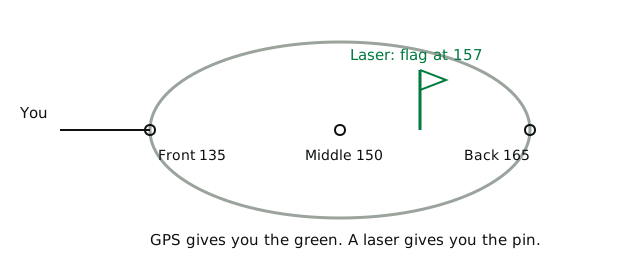
The best golf rangefinder for most UK golfers is the Shot Scope PRO L5: a clear OLED display, 7x magnification, a slope switch and a magnet at a mid-table price. On a tight budget, choose the PRO L2 or the Inesis Laser 900. Bushnell's Tour Hybrid suits anyone wanting laser and GPS together.
Every spec here comes from the maker, every price from a UK retailer page we opened on 2 November 2026 and every "on the course" comment from a named independent tester. Our how we choose page sets out the whole method.
Three things most rangefinder guides skip
- Slope on in a friendly can stop that card counting for your handicap, not only a competition card.
- The cheap-to-dear gap in measured accuracy is small. The real gap is how often a golf laser grabs the flag and not the trees behind it.
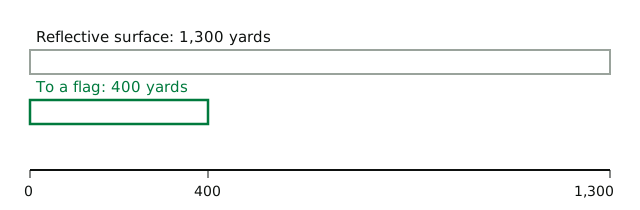
- The 1,300 yards on the box is a reflective target. The figure to a flag is far lower.
The best golf rangefinder for each type of golfer
| Best for | Golf rangefinder | Why it's here | Know this first |
|---|---|---|---|
| Most golfers | Shot Scope PRO L5 | OLED, 7x, slope switch, magnet | Weight listed as 340g or 230g, so check it |
| Best budget golf rangefinder | Shot Scope PRO L2 | Slope, magnet, no subscription | 700-yard range, plainer feel |
| Under £100 | Inesis Laser 900 | Lightest here, slope ring | IPX2, light rain only |
| Regular competition golfers | Bushnell Tour V7 Shift | Two-colour display shows slope at a glance | Club advice needs a Foresight launch monitor |
| Laser plus GPS in one | Bushnell Tour Hybrid | Front, centre, back numbers in the viewfinder | Expensive, LCD not OLED |
| Garmin watch owners | Garmin Approach Z30 | Laser reading syncs to your watch | 400 yards to a flag |
| Shaky hands | Nikon Coolshot Pro III Stabilized | Steadies the view and the laser | Takes time to get used to |
| Data fans | Blue Tees Captain Pro | GPS through the app, IP67, USB-C | Best extras need your phone |
How to choose: your handicap, budget and course
Start with how you play, not the spec sheet. A higher handicap golfer often gets more from a simple laser plus front and back numbers than from a £500 device. This table is our reasoning from the facts below, so treat it as a starting point.
| If you... | Budget | Look at | The reason |
|---|---|---|---|
| Are new or play off 25+, mostly friendlies | Under £150 | Inesis Laser 900 or PRO L2 | You need the right club more than clever extras. Learn your distances first. |
| Play off 10 to 24 on a flat course | £150 to £250 | PRO L5 | A clearer display helps with trees behind the green. Slope matters less. |
| Play a hilly course and enter club comps | £150 to £400 | PRO L5 or Tour V7 Shift | Slope teaches you how hills change a yardage in practice. A clear switch keeps you legal. |
| Play off single figures | £300 to £500 | Tour V7 Shift or Tour Hybrid | Exact pin numbers pay off when you can hit a number. |
| Already wear a Garmin watch | £300 to £400 | Approach Z30 | It adds what a GPS watch lacks and keeps your numbers in one place. |
| Struggle to hold a laser still | £400 to £500 | Coolshot Pro III Stabilized, or a flag-locking Bushnell | Stabilising or a forgiving flag lock. See the Golf Insider view below. |
Not sure a laser is right at all? Our guide to rangefinder vs GPS vs golf watch compares the three. A GPS watch or handheld golf GPS gives front, middle and back numbers without aiming at anything, which can suit a higher handicap better. If you've got a phone, the best golf apps may give you enough for nothing.
Is a dearer golf rangefinder more accurate?
Barely.
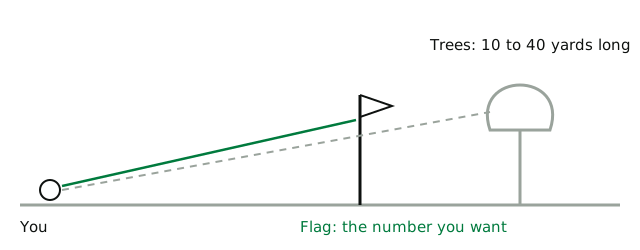
Golf Insider measures each laser rangefinder between 50 and 200 yards and publishes the average error. Its figures show a budget model within half a yard of the most expensive. Golf Insider's point is that the main separator between higher and lower-cost models is the ability to grab the flag and not the background.
So you aren't paying a lot extra for a truer number. You're paying for a better chance of a right first go, a clearer view and tougher weather protection. That's why the best golf rangefinder for you depends on your eyes, your hands and your weather more than on any accuracy claim. Check your reading with this routine, adapted from Golf Insider's advice:
- Hold it with both hands, elbow bent at about 90 degrees and flag lock on.
- Wait for the buzz or light that says it has locked on the flag.
- Not sure? Aim on purpose at the trees behind the green.
- Compare. Golf Insider says the gap is likely to be 10 to 40 yards. If your two numbers match, you probably hit the trees both times.
Our eight picks
Best for most golfers: Shot Scope PRO L5
Club golfers who want a clear display and slope without paying £400.
The PRO L5 has an OLED display, 7x magnification, a slope switch and a built-in cart magnet. Shot Scope quotes about 5,800 readings from a replaceable CR2 battery, a two-year warranty and no subscription for its app. Golf Monthly says few rangefinders combine OLED, 7x and rapid readings as well at this price. National Club Golfer named it best value and says the display stays clear in bright sun.
- Few rivals at this price pair OLED with 7x
- Slope switch for competitions
- Free GPS aerial maps through the app
- Shot Scope lists 340g, the heaviest figure here by a distance. Golfalot's review repeats it. Scottsdale and The Golf Shop Online both list 230g. If you carry your bag or want a pocket laser, handle one first or look at the PRO L2.
- "Water resistant" with no IP number on the spec sheet.
- Price checked in Shot Scope's Black November sale. Its list price is higher.
Best budget golf rangefinder: Shot Scope PRO L2
Golfers wanting the basics done properly, plus a magnet, for under £150.
You lose OLED, 7x and range against the L5, but you keep what most budget lasers drop: adaptive slope that switches off, target-lock vibration, a cart magnet and the same two-year warranty. Shot Scope lists it at 215g against 340g for the L5, so it should be the lighter of the two. Its 700-yard limit won't bother anyone on a golf course. Golf Monthly says golfers rarely need to measure beyond 250 to 300 yards. Today's Golfer makes it its best value pick, with a plastic button and battery cover as the one complaint.
- Yards or metres
- Adjustable eyepiece for your eyesight
- Case, clip and battery included
- 6x and no OLED, so expect a plainer view than the L5.
- No IP number listed. Keep it in the case in heavy rain.
- Price checked in Shot Scope's Black November sale. Its list price is higher.
Cheap golf rangefinder under £100: Inesis Laser 900
First-time buyers who play in decent weather and don't need a magnet.
Decathlon's own-brand laser is the cheapest pick and the lightest at 178g. It has 6x magnification, first target priority to pick the flag over the trees, confirmation by vibration and a ring around the eyepiece that turns slope on and off. Golf Monthly's guide makes the 900 its best budget choice and found it held a 1-yard accuracy standard. In its earlier review, it found minimal difference from a Bushnell Tour V4 Shift. Decathlon's two-year warranty applies.
- Slope at under £100 is rare
- Carry case, clip and battery included
- 1-year returns for Decathlon members
- IPX2 means light rain. Decathlon also warns it can't be used in fog.
- Golf Monthly's review noted no battery level in the display and a less clear screen than the Bushnell.
- One recent UK buyer on Decathlon's page calls the button stiff, so try it in store if you can.
Best for regular competition golfers: Bushnell Tour V7 Shift
Keen club golfers who want the clearest sign of whether slope is on.
The Tour V7 Shift shows slope-adjusted numbers in green on a two-colour OLED display, so you can see which number you're reading. That matters if you flip between friendlies and medals. You also get Slope-Switch, PinSeeker with Visual JOLT (a vibration and flashing ring when it locks on), a BITE magnetic mount, IPX6 and a two-year warranty. Golf Monthly picks it for its display, while National Club Golfer rates its feel in the hand.
- Press Mode to recall your last yardage
- Golf Monthly reports a clear display and a sturdy build
- Bushnell quotes +/- 1 yard
- The personal club advice needs Foresight launch monitor data and you can't use it in a competition. One buyer on Bushnell's site complains there's no manual input.
- National Club Golfer says V5 and V6 owners probably needn't upgrade.
- The Tour V6 Shift is still on sale for less. Worth checking.
Best hybrid rangefinder: Bushnell Tour Hybrid
Golfers replacing a laser and a GPS with one device.
This GPS laser rangefinder shows a lasered pin number with GPS front, centre and back yardages in the viewfinder, with no phone or signal needed. Bushnell lists 40,000+ courses and no subscription. Golf Monthly makes it its top pick and praises its ease of use. National Club Golfer calls it best premium and notes that it tells you where the flag sits on the green. Slope applies to both laser and GPS numbers and the switch turns it off for competitions.
- Works without a phone
- Handy on courses with no pin sheet
- BITE magnetic mount and IPX6
- National Club Golfer says specialist GPS devices give much more detail on each hole.
- LCD, not the OLED of the cheaper V7.
- Buyer reviews on Bushnell's own site are split on GPS reliability and battery life, with some reporting problems.
Best with a Garmin watch: Garmin Approach Z30
Golfers who already wear a Garmin and want an exact pin number too.
The Z30's trick is sending your lasered distance to a compatible Garmin device or the Garmin Golf app, which can then show distances from the pin to the front and back of the green. It has a transparent red OLED, 6x, IPX7 and a CR2 battery Garmin rates at up to a year. National Club Golfer picks it as the one to pair with a watch. On its own, it's a good laser at a price with stronger rivals, so we'd only pick it if you're already a Garmin user.
- IPX7, which Golf Monthly calls the gold standard
- Find My Garmin helps locate a lost one
- Tournament mode has an indicator light
- Built-in magnetic cart mount
- Garmin lists 400 yards to a flag, fine for almost any shot but lower than the Bushnells.
- Garmin's own site says it won't deliver this item to Northern Ireland.
- Our best GPS watches guide covers which watches to pair it with.
Best for shaky hands: Nikon Coolshot Pro III Stabilized
Golfers with a tremor or unsteady aim, happy to pay for it and to learn it.
Nikon's stabilising reduces shake in the view and aligns the laser with it. No other pick here lists stabilising. Nikon quotes a result in 0.1 seconds, a Locked On sign plus a vibration, an eye relief that suits glasses wearers and accuracy of +/- 0.75 of a yard under 700 yards. National Club Golfer picked the earlier Pro II as its best for shaky hands.
- Long eye relief for glasses
- Waterproof to 1m for 10 minutes, fogproof
- Actual distance mode for competition days
- Golf Insider found the older Pro II had a lag that took getting used to. It suggests a laser that picks up the flag well when waved over it may suit some golfers better.
- Nikon says the battery chamber is rainproof to an IPX4 equivalent, so dry it before opening.
- Check you can live without a magnet, as Nikon's page doesn't list one.
Best smart rangefinder: Blue Tees Captain Pro
Data fans happy to use a phone during a round.
This golf laser has a 7x OLED display, IP67 dust and water protection, USB-C charging, a magnetic strip and a slope button that lights red so everyone can see it's on. Pair it with the Blue Tees GAME app for GPS distances, aerial views and shot tracking. Golf Monthly's review calls the display superb and the value remarkable, while National Club Golfer's verdict is a market shaker.
- No batteries to buy
- Find My Rangefinder through Bluetooth
- IP67, so dust protection as well as water
- Golf Monthly's reviewer found the app slow in places and saw Bluetooth drop a few times mid-round.
- One year of the analytics package is included, then it's a subscription. Golf Monthly quoted US$49 a year at review.
- Club suggestions and True Distance (wind, slope, temperature) must stay off in a competition.
The shot tracking on the Captain Pro overlaps with dedicated kit. If your main goal is stats, read our best golf shot trackers guide first, then decide.
Good rangefinders that just missed
- Bushnell Pro X3+: Golf Monthly's accuracy pick with 7x and wind data from the app, but most golfers won't get value from the extra spend.
- Bushnell A1-Slope: very small with a 350+ yard flag range. Golf Monthly says the display could be clearer.
- Garmin Approach Z82: a colour map in the viewfinder. Golf Insider calls it overkill for many golfers and says it needs pre-loaded courses.
- Mileseey GenePro G1: laser with a side touchscreen. Golf Monthly reports occasional lag.
- Precision Pro Titan Elite: Golf Monthly's most durable pick, at a similar price to the V7.
- Voice Caddie Laser Fit 2: Golf Monthly's lightest at 120g with a triangulation mode, but it comes without a case.
- GolfBuddy Laser Lite 2: the original was Golf Insider's budget pick and the new one looks promising, but its full review wasn't finished when Golf Insider last wrote about it.
- Pinned Prism+: 7x and rechargeable in six colours, says National Club Golfer.
Compare these laser rangefinders side by side
Use the tool below for a side-by-side view of the specs. Our golf gadget comparison tool does the same across other kit if you're torn between a laser and something else.
What the specs mean on a wet Saturday
Range: ignore the big number
A rangefinder's headline range is to a reflective target, not a thin flagstick. Garmin lists the Z30 at 7 to 1,300 yards to a reflective surface but 400 yards to a flag. Bushnell's own chart lists 500+ yards to a flag on the V7 and Hybrid, 600+ on the Pro X3+ and 350+ on the A1-Slope. Any of those covers a realistic approach shot, so don't pay extra for range alone.
Magnification and display
6x is standard. 7x makes the target look a little closer, which Golf Monthly says makes it easier for the laser to lock on. More makers now use OLED displays and Golf Monthly says Shot Scope's earlier screens weren't as clear as rivals until the OLED L5 arrived. If you wear glasses, look for long eye relief or an adjustable eyepiece.
Water ratings aren't all the same
| Rangefinder | What the maker says | What that means for you |
|---|---|---|
| Inesis Laser 900 | IPX2, light rain | Fine in drizzle. Keep it in the case when it's heavier. |
| Shot Scope PRO L2, L5 | "Water resistant", no IP number | You can't compare it. Shot Scope calls the L2's case waterproof in one place and water resistant in another. |
| Bushnell Tour V7, Hybrid | IPX6 | Golf Monthly's glossary: withstands powerful water jets. |
| Nikon Pro III Stabilized | Waterproof to 1m for 10 minutes | Waterproof body, but the battery chamber is only rainproof. |
| Garmin Approach Z30 | IPX7 | Golf Monthly calls IPX7 the gold standard for wet weather. |
| Blue Tees Captain Pro | IP67 | Water rating plus dust protection. |
Slope: what "plays like" really does
Slope uses an angle sensor to adjust the straight-line distance for elevation. An uphill flag plays longer and a downhill flag plays shorter. The numbers in this drawing are an example, not a measurement.
It's helpful on a hilly course and in practice rounds because it teaches you how much a hill changes your club. That lesson stays with you on competition days, when the switch is off.
Magnets, batteries and running costs
Magnets are sold for buggy bars, so they only help if you've got magnetic metal nearby. If you walk with a trolley, hold a fridge magnet against the frame before you pay extra for one. Golf Monthly's reviewer rarely takes a cart, so it isn't a big factor for them.
Here's a worked example for batteries. Say you take 30 readings a round and play 40 rounds a year, so 1,200 readings. Shot Scope's stated 5,800 readings on a CR2 would last you about four years and ten months. Decathlon's 5,000 readings comes to about four years and two months. Clubhouse Golf notes that temperature and scanning both affect battery life, but battery cost hardly separates these lasers. A subscription can: over five years, the Captain Pro's analytics would cost you four years of fees if you keep them, while Shot Scope and Bushnell say their lasers need none.
Can you use a rangefinder with slope in a competition?
Not with slope switched on. This is the rule that catches people out.
A rangefinder itself is legal in competitions unless the committee has banned them. Rule 4.3a of the R&A's Rules of Golf allows distance and direction information but not measuring elevation changes. It also bars using a device to get a recommended club or line based on where your ball lies. Committees can ban them with Model Local Rule G-5, so check the card or noticeboard.
Slope on: what happens
- In a competition: the penalty for a first breach is the general penalty, two strokes in stroke play or loss of hole in match play. A second breach in the round means disqualification. Some guides make it sound like instant disqualification, but it isn't.
- In a friendly you submit for your handicap: a general play score generally isn't acceptable if you breach a Rule without applying the correct penalty, or deliberately ignore one. The Rules of Handicapping, clarification 2.1b/2, is written about competition disqualifications, but it lists using a device to measure elevation as a significant scoring advantage with the score not acceptable. Your club's committee makes the final call and can adjust a hole score in general play, so ask if it happens.
- In a friendly you don't submit: no handicap problem. Use it as much as you like.
Our guide to whether rangefinders are legal in golf goes through more cases. Get into this habit:
- Slope switch off before the first tee of any card you'll hand in
- Club suggestions off on smart lasers
- Wind and "true distance" modes off
- Local rule on the card checked
The mistakes people make when buying a golf rangefinder
- Buying on range. A 1,300-yard claim is no use to you if you can't lock on the flag at 180.
- Ignoring weight. Decathlon's 178g against Bushnell's 9oz (about 255g) is a real difference if you carry your bag.
- Paying for slope, then leaving it on. See the rule above. Only buy a model with a clear off switch.
- Forgetting the phone. Some smart features need the app and a charged phone, as National Club Golfer points out on the Captain Pro.
- Skipping your own numbers. A perfect yardage only helps if you know how far each club goes. Our golf club distance calculator gives you a chart to start from.
- Buying a US price. Several guides quote dollars. UK prices don't always convert neatly, so check the pound price.
- Buying from an unknown brand on price alone. Golf Monthly warns that unproven ultra-budget models are a gamble. Read a named review first.
A rangefinder is only one way to spend your golf gadget money. Our best golf gadgets guide ranks what's worth buying first. Our best handheld golf GPS guide covers the handheld side of this choice.
Bottom line
- Under £150: Shot Scope PRO L2, or the Inesis Laser 900 if you play in dry weather.
- Most golfers: the Shot Scope PRO L5. Check its weight first if you carry your bag.
- Laser and GPS together: Bushnell Tour Hybrid.
- Whichever you buy, switch slope off before you tee off in anything that counts.
Your questions answered
Are rangefinders allowed in club competitions in the UK?
Yes, unless the committee has banned them by Local Rule, so check the card or noticeboard. Rule 4.3a of the Rules of Golf allows distance information but not measuring elevation, so slope must be off.
Can I use a rangefinder with slope in a round I submit for my handicap?
Don't. The Rules of Handicapping give using a device to measure elevation as an example of a score that's not acceptable. Your club's committee makes the final decision, so ask them if it has happened.
How accurate is a golf laser rangefinder?
Most makers state about 1 yard. Golf Insider's measurements between 50 and 200 yards show average errors under half a yard, even on a budget model. The bigger risk is reading the trees and not the flag.
Is a cheap golf rangefinder worth it?
Often, yes. Golf Monthly rated the Inesis 900 as its best budget pick. You give up some display clarity and weather protection, so read the water rating. Golf Monthly also warns against unproven ultra-budget brands.
Do I need a rangefinder with slope?
Only if your course is hilly or you want to learn how elevation changes a yardage. Choose a golf rangefinder with slope and a clear off switch, because you can't use it in competitions or rounds you'll submit.
Is 7x magnification better than 6x?
It makes the target look a little closer, which Golf Monthly says helps the laser lock on. 6x is standard and plenty for most golfers. A clear display matters at least as much.
Do laser rangefinders work in rain and fog?
It depends on the rating, from IPX2 for light rain on the Inesis to IP67 on the Blue Tees Captain Pro. Decathlon warns its laser can't be used in fog, so don't expect a reading in thick mist.
Do golf rangefinders need a subscription?
Most don't. Bushnell and Shot Scope both say theirs need no subscription. The Blue Tees Captain Pro includes a year of its analytics package, then charges for it. The laser itself still works without one.
Where these facts came from
- What Rule 4.3a allows and bars, Model Local Rule G-5 and the penalty for a breachchecked 2 November 2026
- When a score counts for handicap, and the committee's final saychecked 2 November 2026
- Clarification 2.1b/2 on measuring elevation with a distance devicechecked 2 November 2026
- Rules Guy's reading of the same handicap clarificationchecked 2 November 2026
- How slope and angle sensors workchecked 2 November 2026
- Today's Golfer's verdict on the Shot Scope PRO L2checked 2 November 2026
- Golf Monthly's picks, buying advice and water rating glossarychecked 2 November 2026
- Golf Monthly's review of the Inesis 900 against a Bushnellchecked 2 November 2026
- Golf Monthly's review of the Blue Tees Captain Pro and its subscriptionchecked 2 November 2026
- National Club Golfer's picks and UK commentschecked 2 November 2026
- Measured average error, flag-grab point and the re-shoot checkchecked 2 November 2026
- PRO L5 specs, price and Shot Scope's stated weightchecked 2 November 2026
- PRO L2 specs and pricechecked 2 November 2026
- Inesis Laser 900 specs, fog warning, price and buyer commentchecked 2 November 2026
- Tour V7 Shift specs, warranty and buyer commentchecked 2 November 2026
- Tour Hybrid specs, course count and buyer reviewschecked 2 November 2026
- Bushnell's chart of flag range across its modelschecked 2 November 2026
- Approach Z30 specs, price and Northern Ireland delivery notechecked 2 November 2026
- Coolshot Pro III Stabilized specschecked 2 November 2026
- UK price and stock of the Nikonchecked 2 November 2026
- UK price and stock of the Tour V7 Shiftchecked 2 November 2026
- UK prices of the Tour Hybrid and Tour V6 Shift, and what affects battery lifechecked 2 November 2026
- Captain Pro specs and UK pricechecked 2 November 2026
- Golfalot's review quoting the PRO L5 at 340gchecked 2 November 2026
- Scottsdale's listing of the PRO L5 at 230gchecked 2 November 2026
- The Golf Shop Online's listing of the PRO L5 at 230gchecked 2 November 2026
Spotted something out of date? Tell us and we'll fix it.